

With winter rolling in and daylight disappearing way too early, keeping up outdoor marathon training takes a little extra planning. Lately, I’ve been looking for a solid lighting setup so I can get my runs in safely after dark without feeling like I’m overcomplicating things.
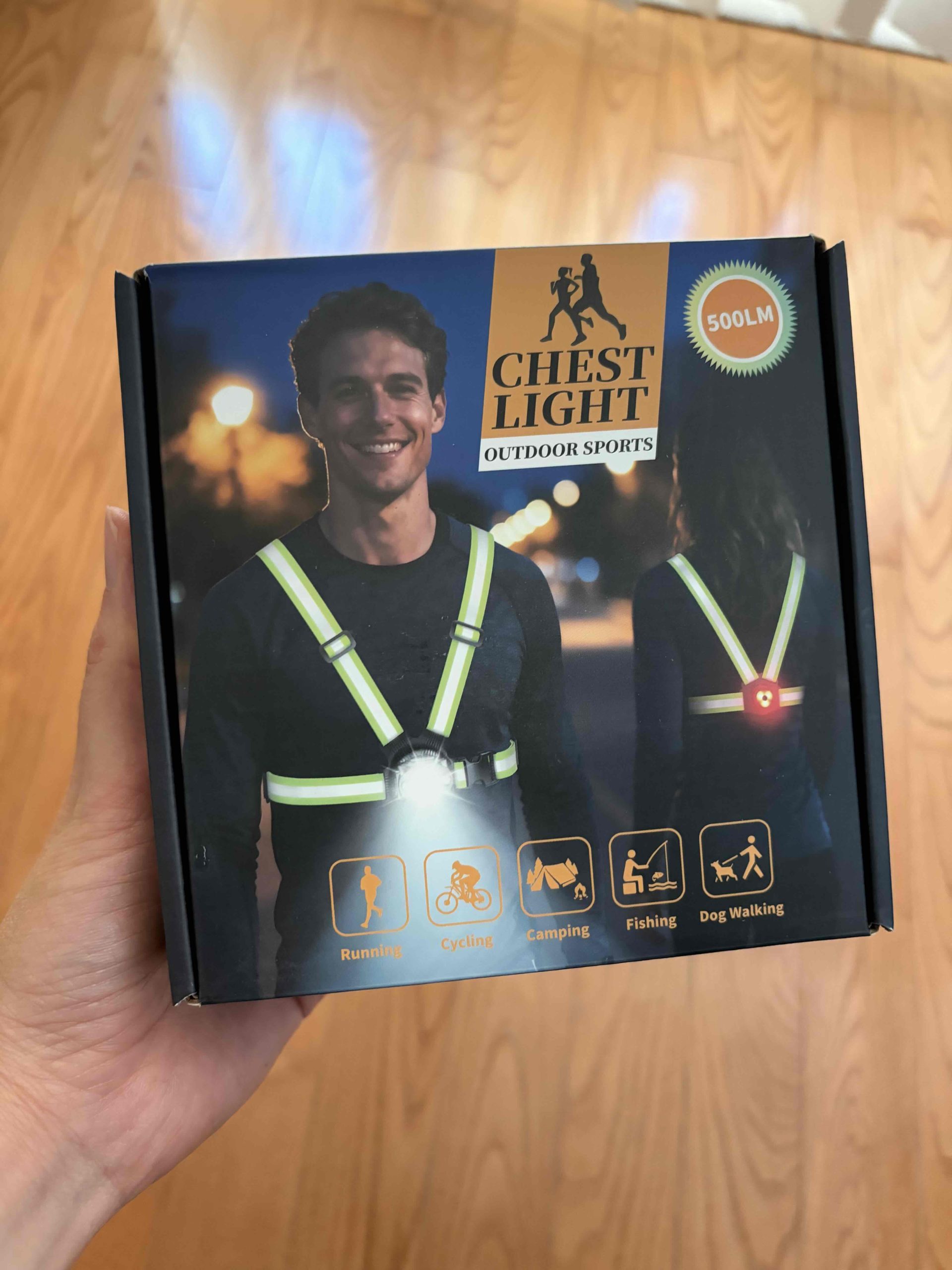
I already have a running headlamp, and while it works, it comes with some drawbacks for me. Wearing something on my head for a long time can sometimes give me a headache, it feels a bit inconvenient to put on, and the beam tends to point right into people’s eyes when I look up or turn my head. That got me looking into running light vests instead. Noxgear makes some really popular ones, but they sit outside my budget right now, so I started searching for more affordable alternatives. Eventually, I picked up a pretty no-brand chest light vest off Amazon just to give it a try.
After a few recent weeks of putting it to use on my runs, here’s how it’s been holding up so far.
Setup and Fit
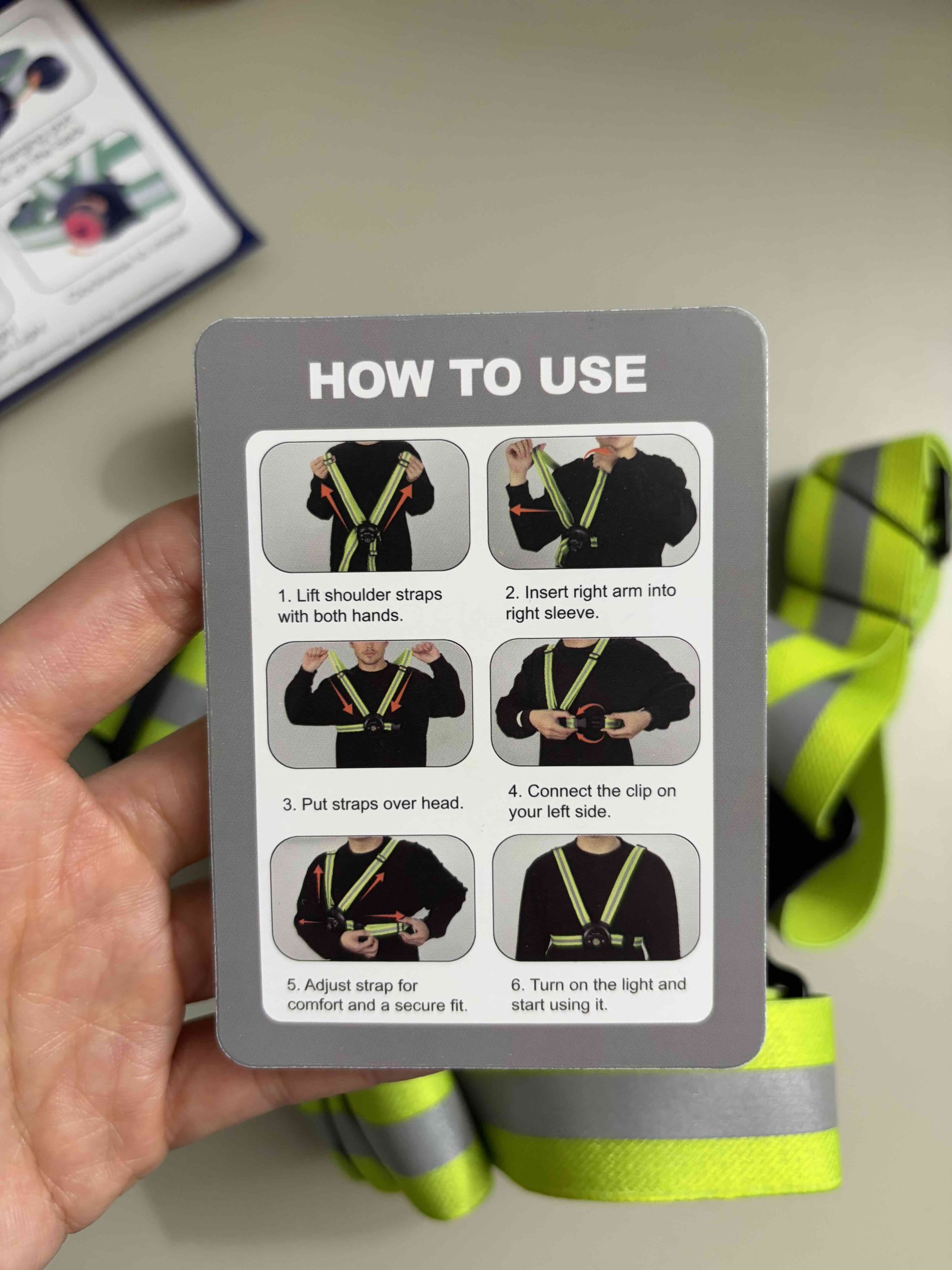
Setting the vest up was straightforward enough, and it came with a instruction card showing how to put it on. That said, I definitely struggled a bit the first time as I tried to figure out the strap sequence. Once you get the hang of it, though, putting it on gets much easier for future runs—lift the shoulder straps, slide your right arm through, bring the straps over your head, clip it on the left side, and tighten the adjustment straps.
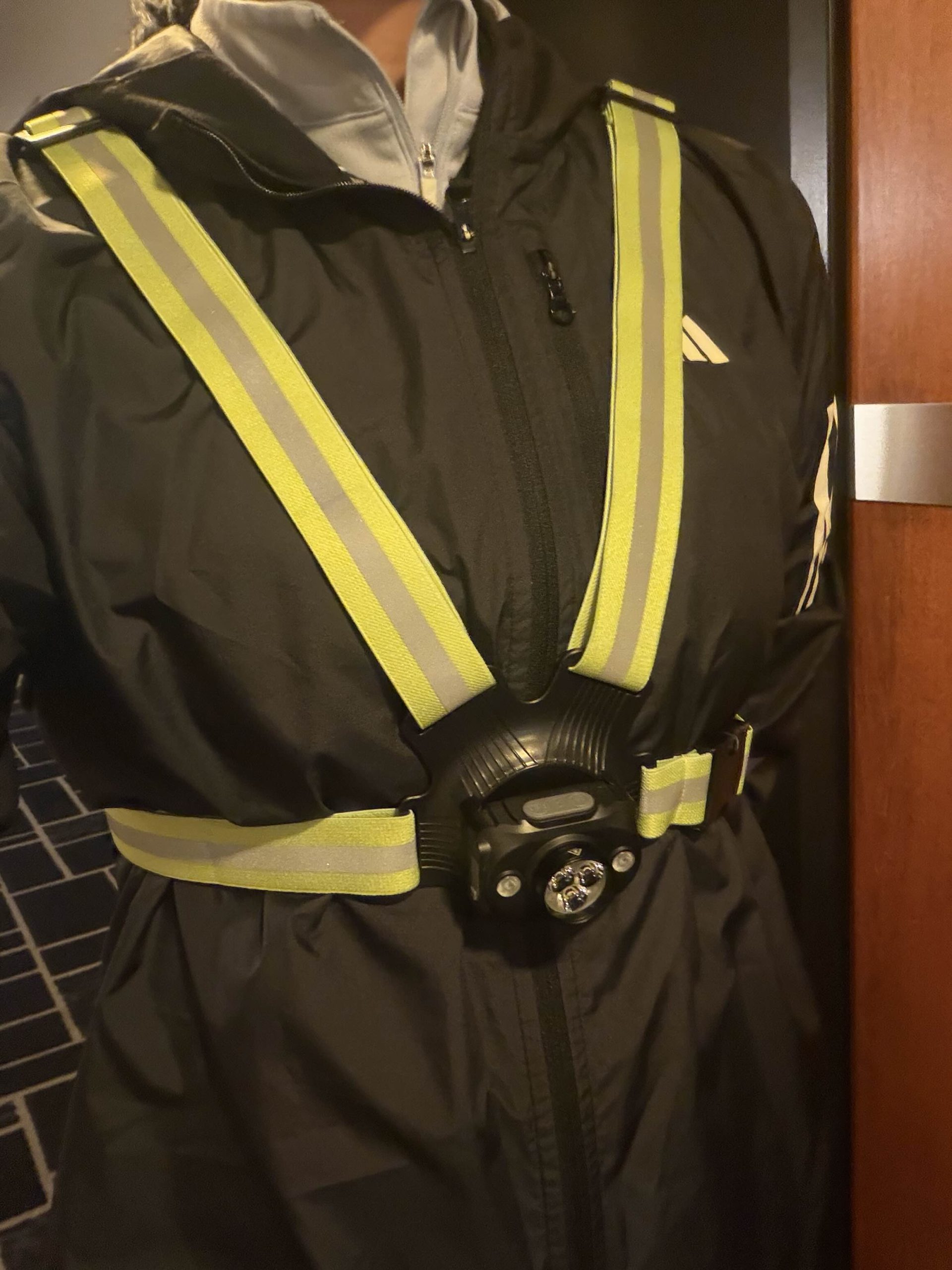
In terms of comfort, I’ve found it surprisingly easy to wear. I usually throw it on over long sleeves or a running jacket, and so far I haven’t had any chafing issues. In fact, once I’m moving, there are moments where I almost forget I’m wearing it. The one minor annoyance comes when you need to shed a layer mid-run. Because the vest straps sit right over your outer layer, you pretty much have to take the vest off first before pulling off a jacket or long sleeve. I haven’t tested it over a tank top yet, mostly because of the colder weather, so I can’t speak to how it feels against bare skin.
Lighting and Visibility
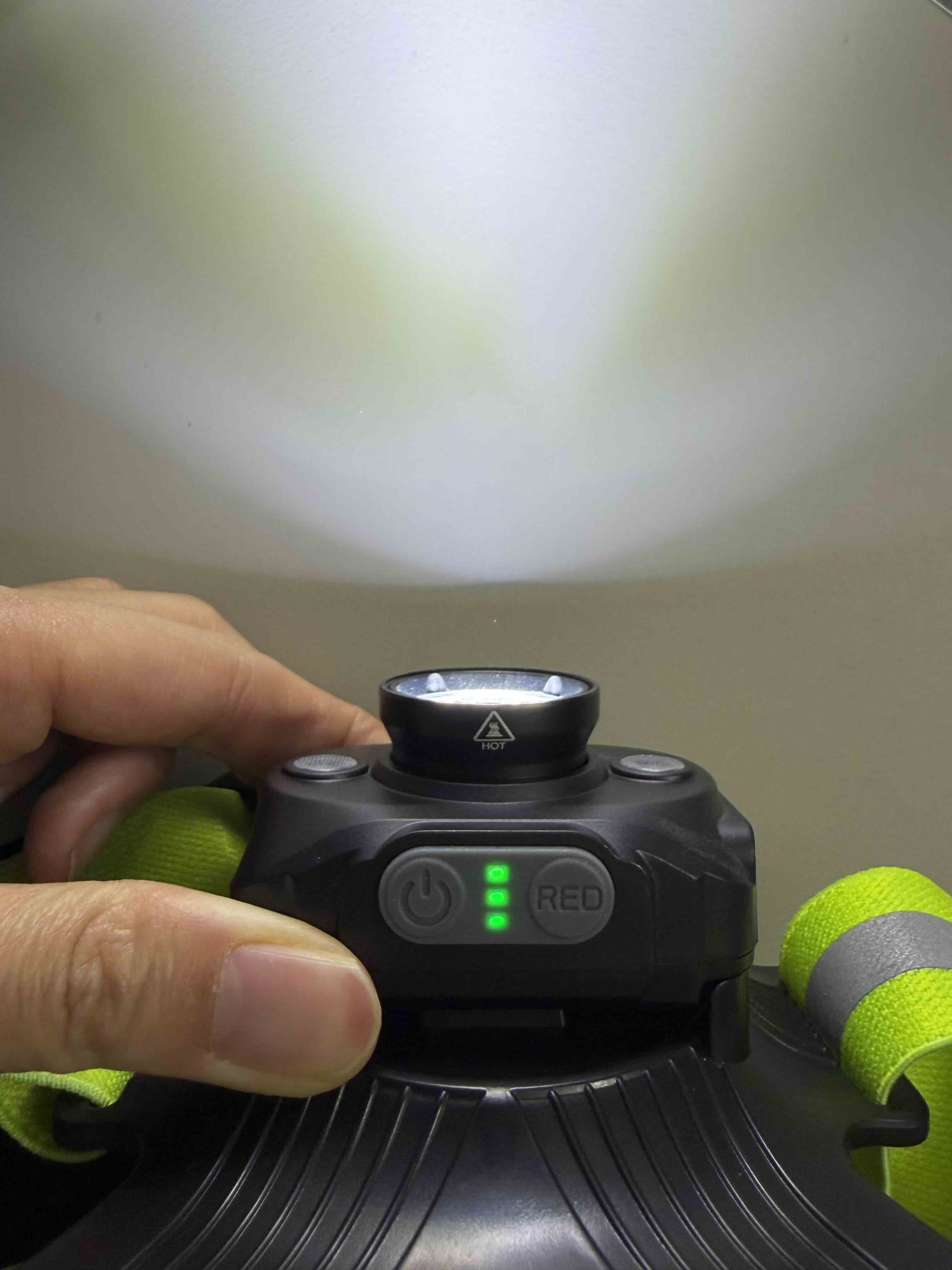
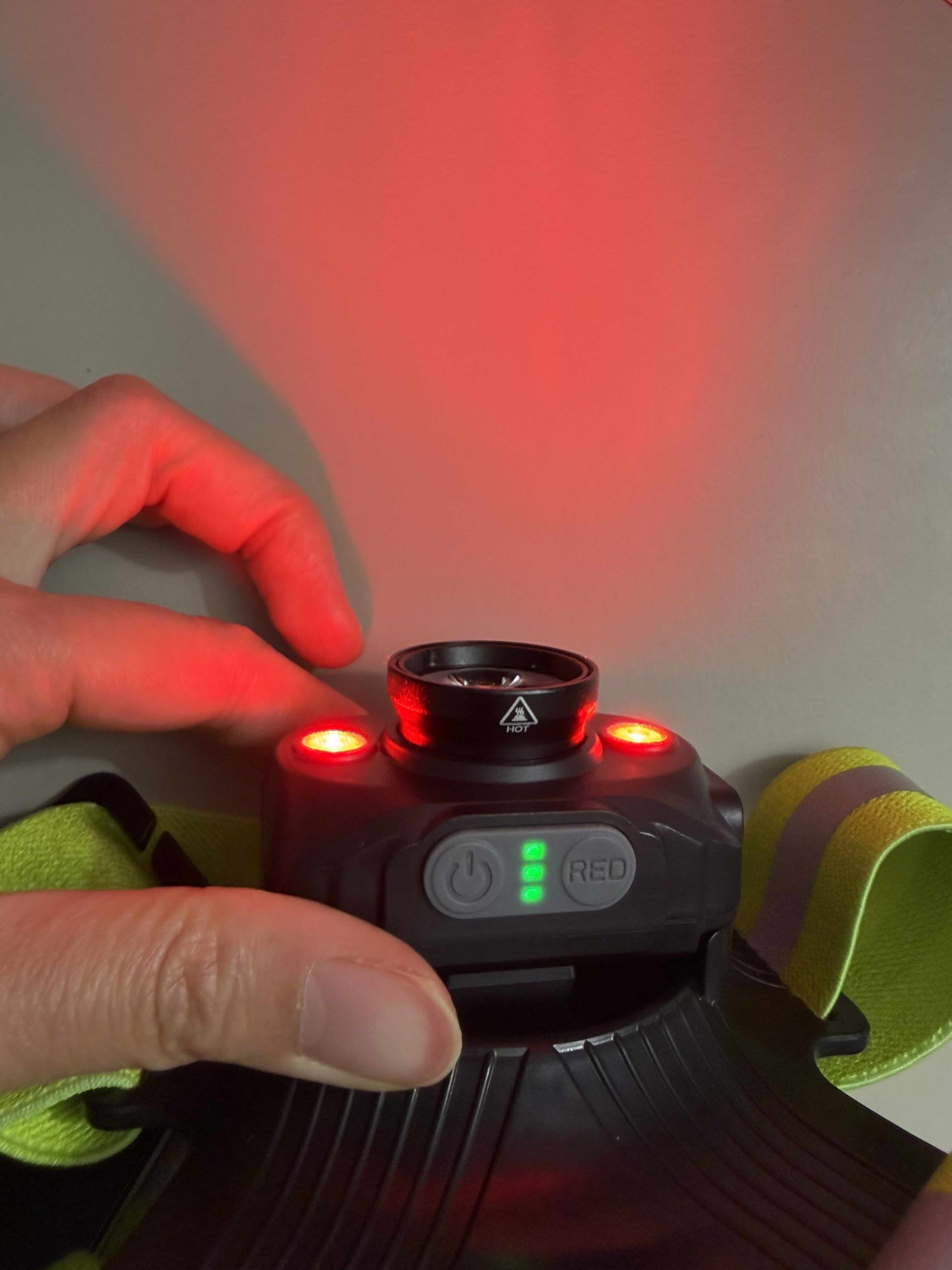
The box advertises 500 lumens, and in practice, the front light is plenty bright for seeing where I’m stepping in the dark.The front unit has white and red light options with different brightness levels, plus a battery indicator and an adjustable angle. Being able to tilt the light angle is easily one of my favorite features—it lets me aim the beam down toward the ground ahead of me instead of shining it directly into the faces of pedestrians.
Battery life has been solid for what I need right now. It easily handles 2- to 3-hour runs at a minimum—I haven’t pushed it past that range yet—and I don’t find myself having to charge it constantly.
On the back, there’s a red light, and the straps themselves feature reflective material. Compared to something like a Noxgear vest that uses illuminated fiber-optic tubing all the way around, reflective strips aren’t quite as glowing on their own without light hitting them. Still, paired with the red rear light, I feel like it does a good enough job alerting drivers and others around me when I’m out in low light or darkness.
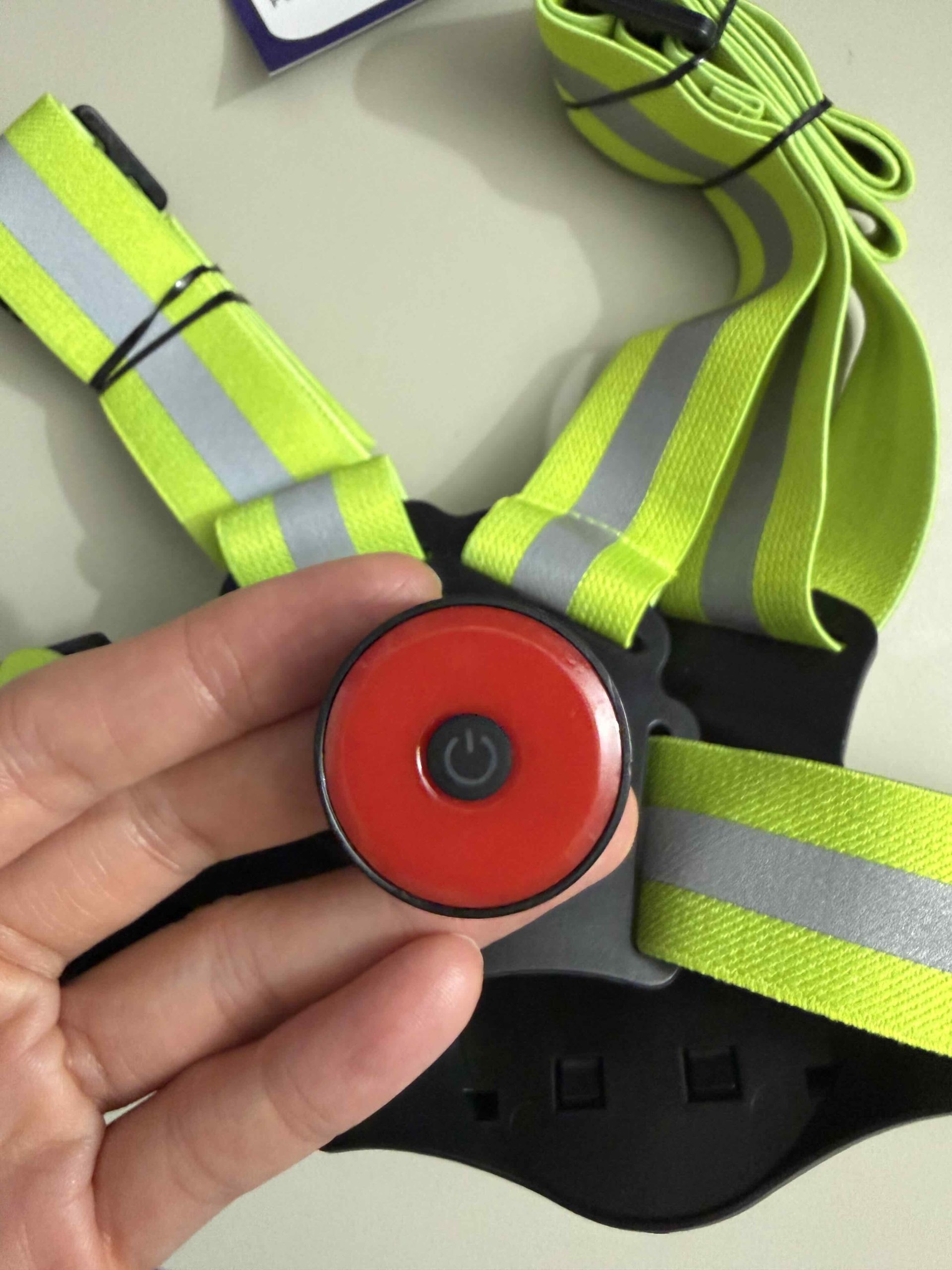
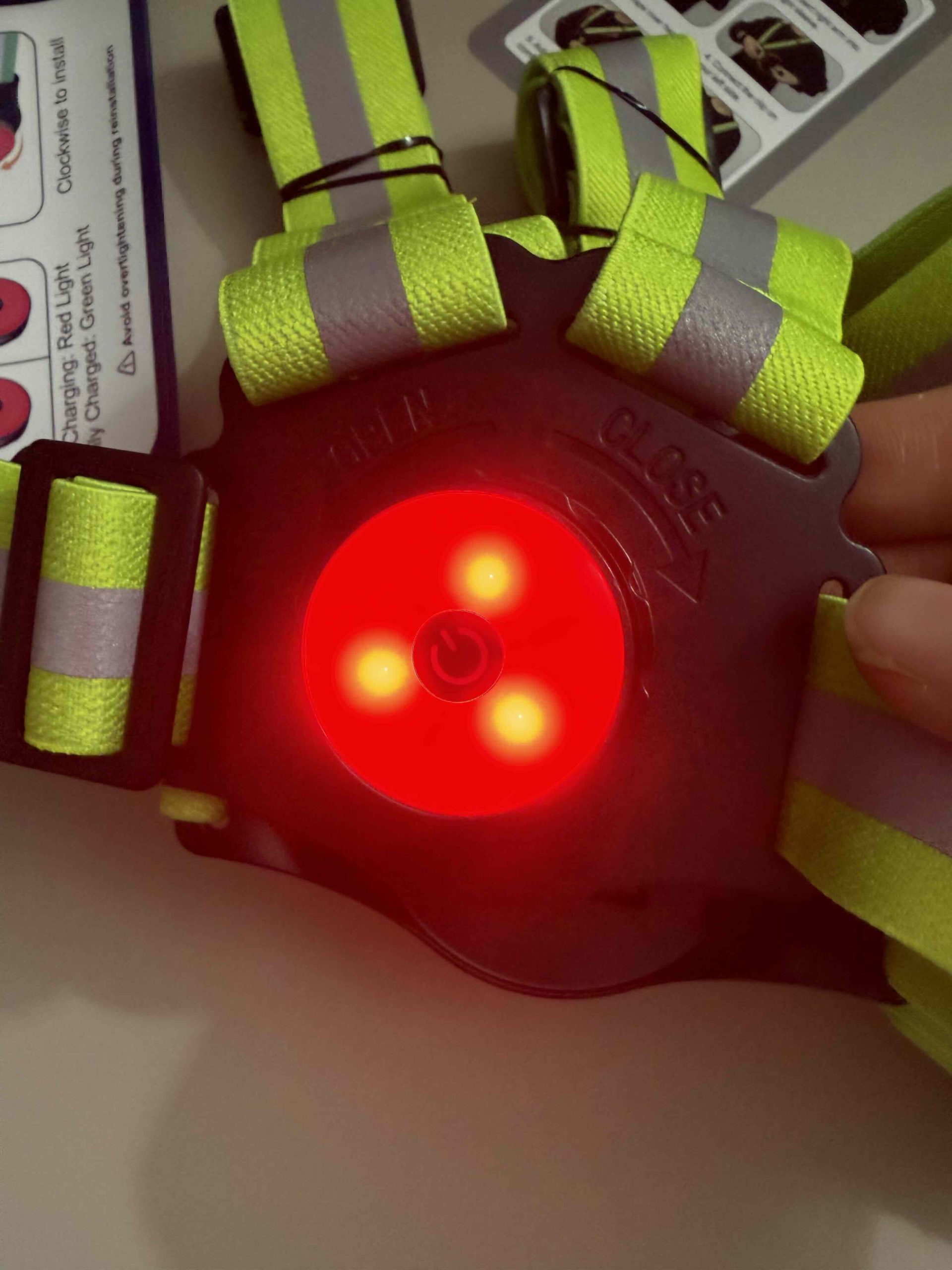
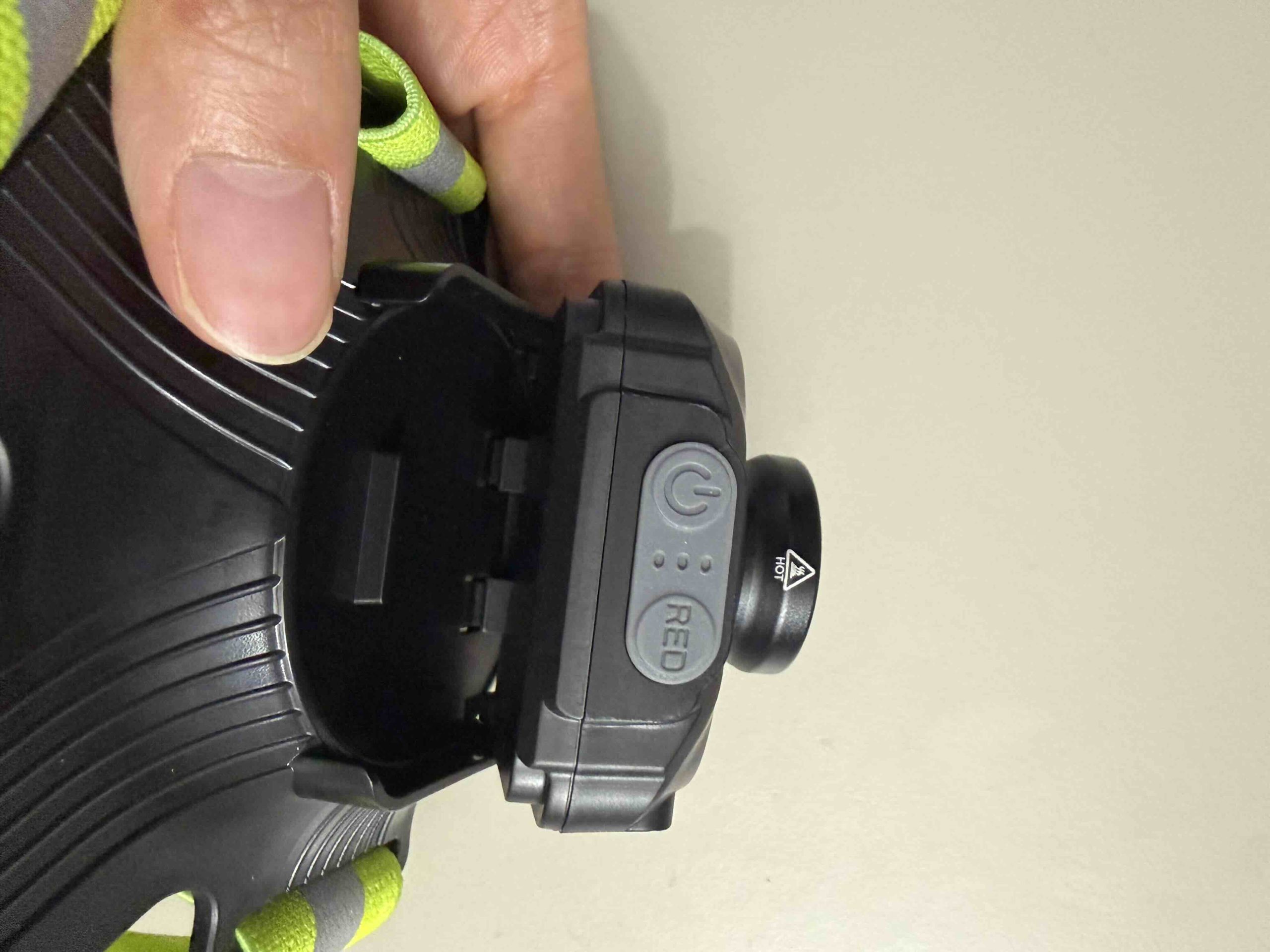
One small trade-off with having a separate front unit and a rear red light (which uses a USB-C port) is that you have to charge the lights separately. It’s not a dealbreaker by any means, and I don’t mind working around it, though being able to charge everything at once would definitely be a nice upgrade.
Conclusion
Since I’ve only been using this chest light for the past few weeks, time will tell how well the clips, straps, and electronics hold up over a full winter of training. Even so, as a budget-friendly option when big-name vests stretch the wallet, it offers great value for getting outside safely when it’s dark out. I’m planning to keep using it on my upcoming runs and see how it goes from here.